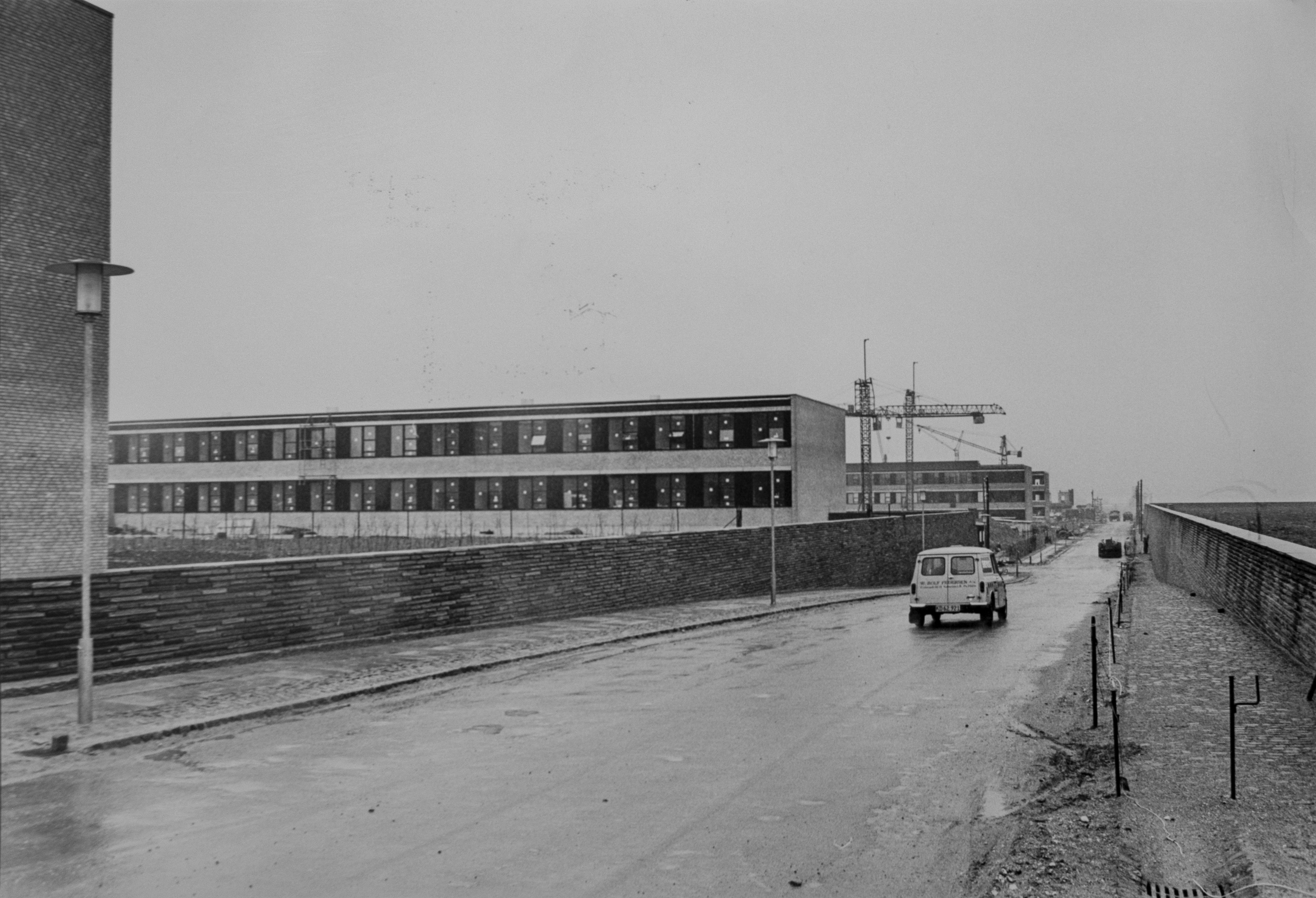
Cultural Heritage at DTU
Development and preservation go hand in hand when we develop, renovate and build at DTU.
DTU’s campuses represent significant landscape and architectural value, with a strong sense of place that we seek to respect as they continue to evolve.
DTU’s work on cultural heritage at Lyngby Campus
DTU has carried out a cultural heritage assessment of Lyngby Campus. The assessment documents the development of the site and identifies the key architectural principles that architects Koppel and Nørgaard applied in creating the campus between 1958 and 1970.
The assessment demonstrates how the architectural principles developed by Koppel and Nørgaard function both individually and together, and how they create a strong architectural and landscape coherence across different scales.
A key objective of the cultural heritage assessment has been to ensure that it serves as an active tool in the ongoing planning and expansion of the campus. The assessment concludes with perspectives and recommendations for specific processes and working methods that can support future campus development.
The cultural heritage assessment was developed in close collaboration between conservation adviser and art historian Rikke Stenbro / SUBSTRATA and DTU.