How is sustainability integrated into the construction?
DTU has designed and constructed the Climate Challenge Laboratory (Building 313) with a strong focus on sustainability, which has been incorporated into all aspects of the project to the best extent possible.
This includes minimizing the CO₂ footprint of the structures, optimizing process energy, and designing with the possibility for disassembly and adaptation. The goal is certification under DGNB Gold, DGNB Heart, and hopefully also DGNB Space Gold (a new certification scheme for interior elements). In addition, the operational solutions have been optimized to support the lowest possible consumption of process energy.
Read more in the newsletter: “A building with optimal energy solutions” (Theme: Process energy and heating)
- In this newsletter, you will meet Erik Krøll, project manager and engineer at Artelia (formerly MOE). He explains how to plan the optimal laboratory building and discusses the new heating principle that DTU is installing in the office section of the building.
Overview of all newsletters
Building lifespan
Building 313 is designed as a generic laboratory building with the objective of ensuring a long lifespan. The generic approach provides the necessary flexibility to accommodate future changes in research needs.
The building is designed to be disassembled and reused. This includes the use of materials that can be recycled and design solutions that make it easy to separate and reuse components.
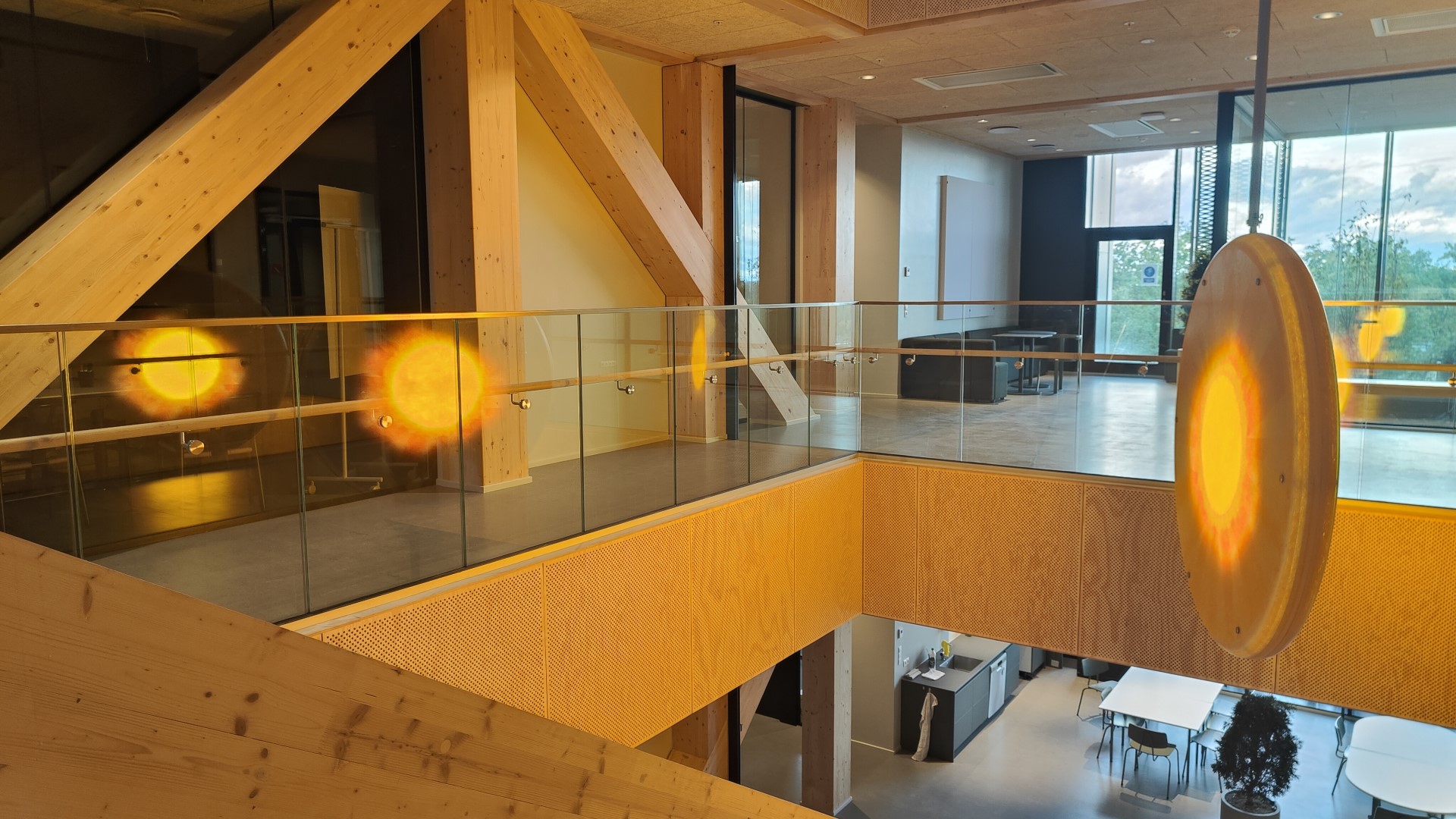
Furthermore, durable materials such as CLT timber structures have been used wherever possible.
Use of materials
A combination of timber, concrete, and steel has been used, with the CLT* timber structure applied to reduce environmental impact, while concrete and steel have been used where necessary to meet functional requirements.
It is a 7-storey timber structure with a height of approx. 31 meters. The timber structure is used only in the office area of the building because the laboratory areas have strict technical requirements - for example, for vibration control - which timber cannot meet.
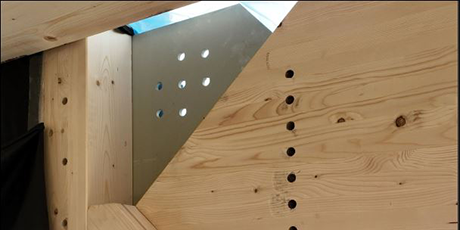
*CLT (Cross-Laminated Timber) is a solid timber element consisting of typically 3, 5, 7, or more layers placed at right angles. CLT has properties similar to concrete and enables large-scale and tall timber construction. A CLT element is stiff and strong, ideal for long spans such as floor separations, floors, and ceilings.
CLT is well suited for prefabrication, which provides a fast and efficient construction process, and it is easy to dismantle once the building reaches the end of its lifespan. In addition, solid timber elements weigh less than concrete, allowing for a smaller and less costly foundation, and the elements can be handled using smaller cranes on the construction site.*
Read more in the newsletter: “A seven-storey timber building takes shape” (Theme: Timber construction)
- In the newsletter, Jakob Haugaard Hansen, production manager at the main contractor MT Højgaard, explains how the team handles the challenge. Structural engineer Stig Tomasson from Artelia (formerly MOE) and Per Thomas Dahl, director of CLT Denmark, who were part of the design and planning process, share their experiences in “CO₂ savings lie in the details” (Theme: Materials and building systems).
- In another newsletter, partner Michael Werin Larsen and project manager Tobias Wittenburg from Christensen & Co Architects explain how they pursued the most sustainable solutions possible when constructing a high-tech laboratory building.
Degree of reuse
DTU has aimed to reuse as many pieces of furniture as possible from the university’s reuse inventory of chairs, tables, and lamps—amounting to 250 items. The ambition was 100% reuse, but this was not feasible while still meeting users’ functional needs.
The building is designed with reuse in mind, including the use of recyclable materials and design solutions that make disassembly and reuse straightforward.
Read more in the newsletter: “Common areas with room for everyone”
- In the newsletter, Maja Frederikke Høgsbro (project manager at Campus Service), Karina Bergmann Jensen (architect at C.F. Møller), and Janet Cohen Muntz (architect specializing in universal design at Christensen & Co Architects) describe how the building has been designed with attention to social and environmental sustainability.
Construction methods
Together with the main contractor MT Højgaard and the advising engineers, we have focused particularly on reuse, site management, and digital design tools when developing Building 313 and planning its construction.
Reuse:
Construction site:
-
Toilets, showers, site huts, and offices heated with heat pumps
-
Energy-saving lighting in shared access areas
-
Waste sorted into fractions
-
Meters on main distribution boards for both site huts and the rest of the construction site to increase awareness of electricity consumption
-
Water consumption meters to increase awareness of water usage
-
Use of district heating for temporary heating on site
Digital design:
-
A complete 3D model for use by production staff
-
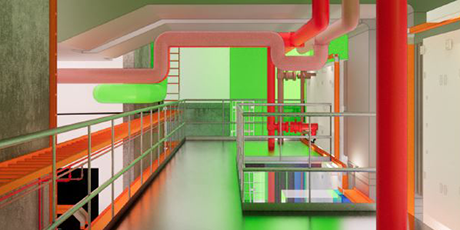
Detailed modelling of plumbing, ventilation, and electrical systems to minimize errors during construction
Read more in the newsletter: “Sustainable construction site”
Biodiversity around the building
Biodiversity has been considered by integrating green areas and planting around the building. This creates habitats for local species and contributes to a healthy ecosystem.
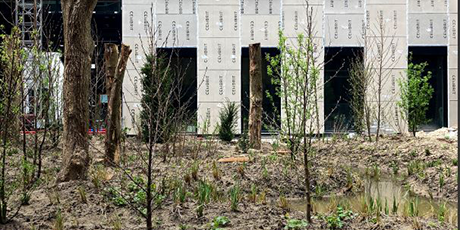
Biodiversity has high priority in and around Building 313, both in the courtyard and on the façade.
In the courtyard, the aim is to attract moths, the five-spot burnet, the small copper butterfly, and the variable longhorn beetle to thrive in the moist forest-floor habitat.
On the façade:The green façades will become a visible signature for Building 313 and provide an experiential value for users inside. Rainwater from the roof flows through planting boxes and down to the ground. Plant species have been chosen according to whether the façade faces east or west and based on their placement, as upper floors are expected to receive more water than lower floors.
Read more in the newsletter: “Nature moves in” (Theme: Biodiversity)
- In the newsletter, Trine Trydeman, partner at 1:1 Landskab, explains how the landscape architects have created space for more species, providing users with a nature experience and raising awareness of an important agenda.
- At the same time, biodiversity initiatives require rethinking the maintenance of green areas. Tom Nordbo Andreassen (section manager, CAS Operations, Park and Road) and Katja Engel Zepernick (project manager, CAS Client, Planning and Project Development) describe how Campus Service at DTU works to increase biodiversity- both long-term and in specific projects on DTU Lyngby Campus.