New Research Building B330 for DTU Space
In 2028, DTU Space will move into the new Building 330, bringing the internationally recognized institute together in one place. Building 330 will provide the institute with the best possible facilities for research, education, and the development of new technologies that deliver vital knowledge about the Earth and the universe from space. The new building will be open and welcoming, with shared spaces that showcase knowledge about space research and technology.

Helpful Links
Shortcuts to key sections of the page.
Facts about Building 330
The use of space is growing. Space-based research and technology now play a crucial role across many fields. This includes exploring our solar system and the universe, but also - to a great extent - using space to ensure a sustainable and secure future. Among other things, it allows us to monitor climate change on Earth by tracking ice in Greenland and Antarctica, sea levels, river flows, and the Sun's impact on our planet, as well as to ensure robust systems for power supply and navigation.
This is why the research and development carried out at the internationally recognized DTU space is vital knowledge for Danish and international high-tech companies, universities, authorities, and space organizations such as ESA and NASA.
Today, ESA and NASA carry out space missions and send climate-monitoring satellites into orbit around Earth or landers to Mars using knowledge and technology developed at DTU Space.
To continue supporting the growing level of research and development activities, DTU Space needs a new building.
DTU is building a new advanced facility, Building 330, for DTU Space, which has outgrown its existing physical facilities. DTU Space needs a larger and more integrated building with specialized areas to house research, education, and innovation. The new building provide DTU Space with the best conditions to work across the entire process - from developing an idea to building, testing, and sending an instrument into space to collect data that researchers can turn into new knowledge.
DTU Space is Denmark's largest space research institute and:
- consists of approximately 210 researchers, PhD students, experts, and other staff
- has an annual turnover about DKK 160-180 million
- educates engineers and researchers and develops new technology and instruments, such as equipment for satellites, spacecraft, drones and aircraft
- collaborates with, among others, the space agencies ESA and NASA, high-tech companies such as Terma, GomSpace, and SkyWatch, and universities including MIT, Caltech, Yale, the Max Planck Institute, and the University of Surrey Space Centre
- provides research-based advisory services to public authorities in Denmark, Greenland, and the Faroe Islands
- is involved in the entire process - from the first scientific idea to sending an instrument into space to collect data that researchers analyze and publish
The primary users of Building 330 are researchers, technicians, PhD students, and students at DTU Space.
In addition, Building 330 will be designed to be open and welcoming to guests such as collaboration partners, industry representatives, decision-makers, high school students, and the public - both nationally and internationally.
The outdoor areas will be accessible to all researchers, students, employees, and visitors at DTU.
Building 330 will mainly consist of specialized laboratories, offices, shared spaces, and teaching facilities.
Specialized laboratories
Building 330 will include a number of highly specialized and complex laboratories for developing and testing space technology. Many of the laboratories will be certified cleanrooms - meaning they are actively cleaned and controlled for contamination, vibration, temperature, and more. Here, researchers can work with sensitive, advanced - and often very expensive - measurement instruments.
Some of the laboratories will be used for developing prototypes, while others will be used for testing, such as stress tests for heat, cold, and vibration that technologies must withstand during space missions and landings.
To supply DTU Space with liquid nitrogen, a tank will be established north of Building 330. Nitrogen is used to cool equipment that must be stress-tested before it is sent into space.
Building 330 is design so DTU Space can work in carefully planned production line, where instruments can move through airlocks from development laboratories to testing laboratories.
One of the laboratories in the new building - the so-called robotics lab - is dedicated to simulating landings in space.
At the top of the building, facilities will be prepared for installing domes with an outdoor laboratory for star observations.
The domes will give the building a distinctive geometric form. The rest of the top floor will mainly contain technical installations and will appear more closed and recessed.
Offices, shared spaces, and teaching facilities
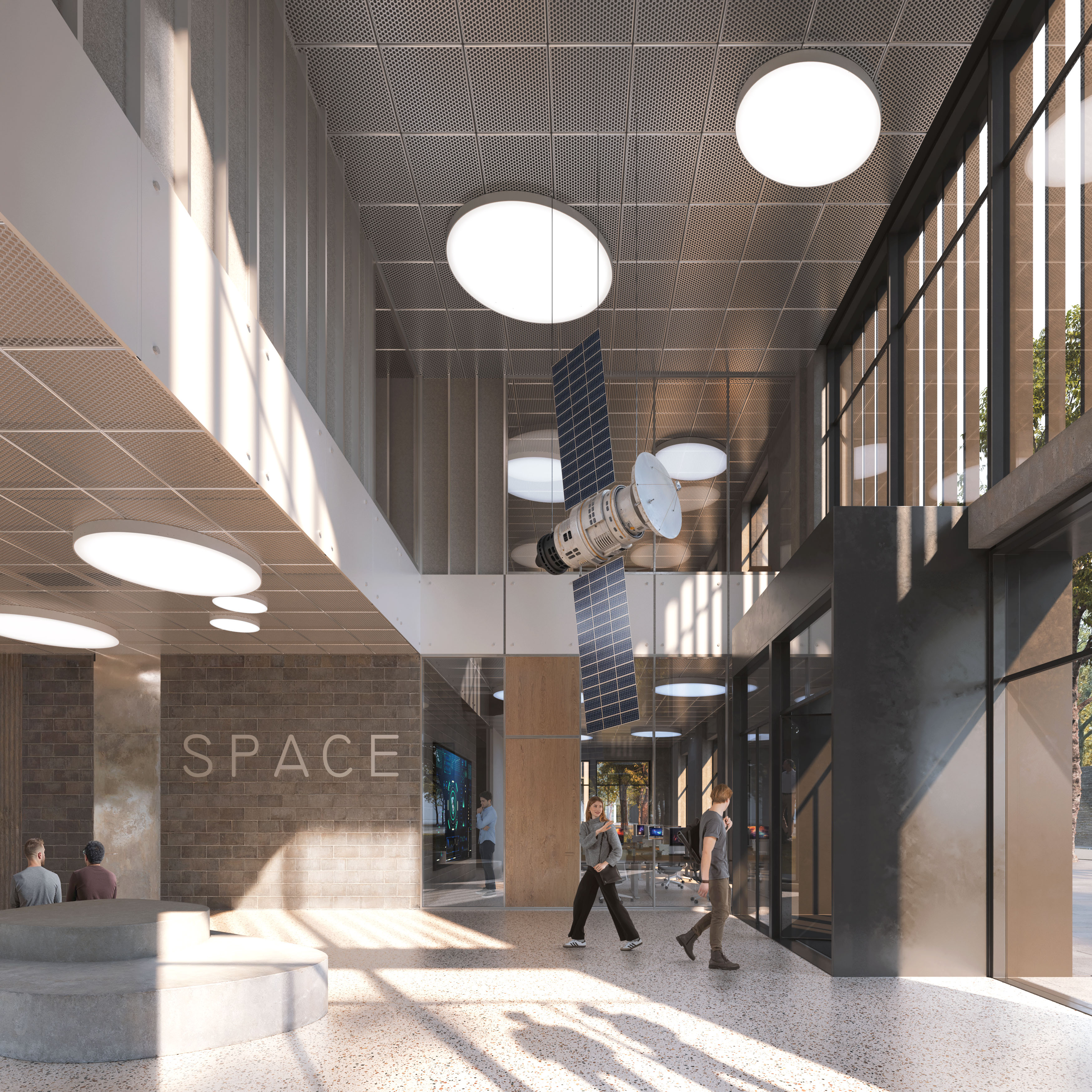
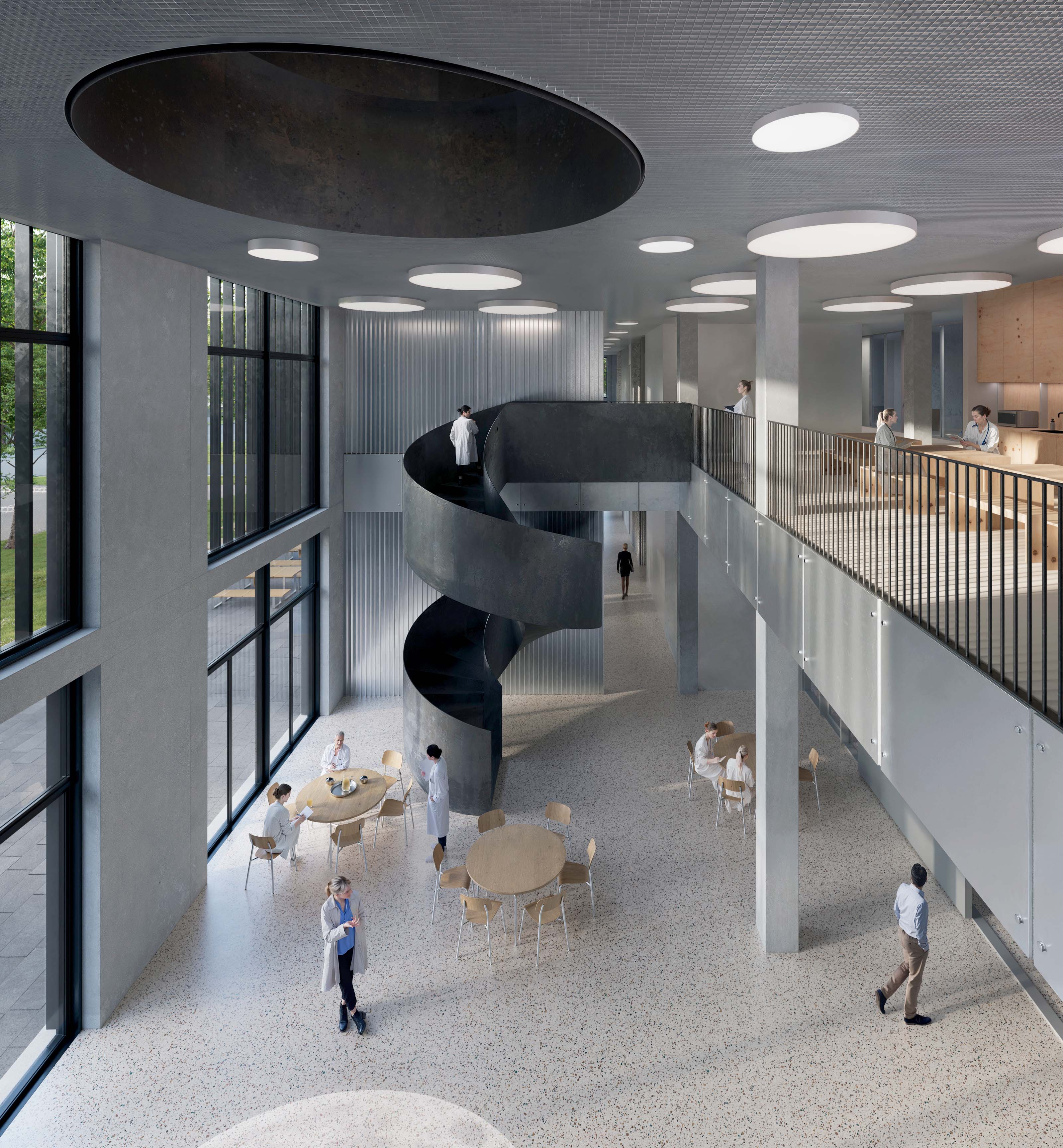
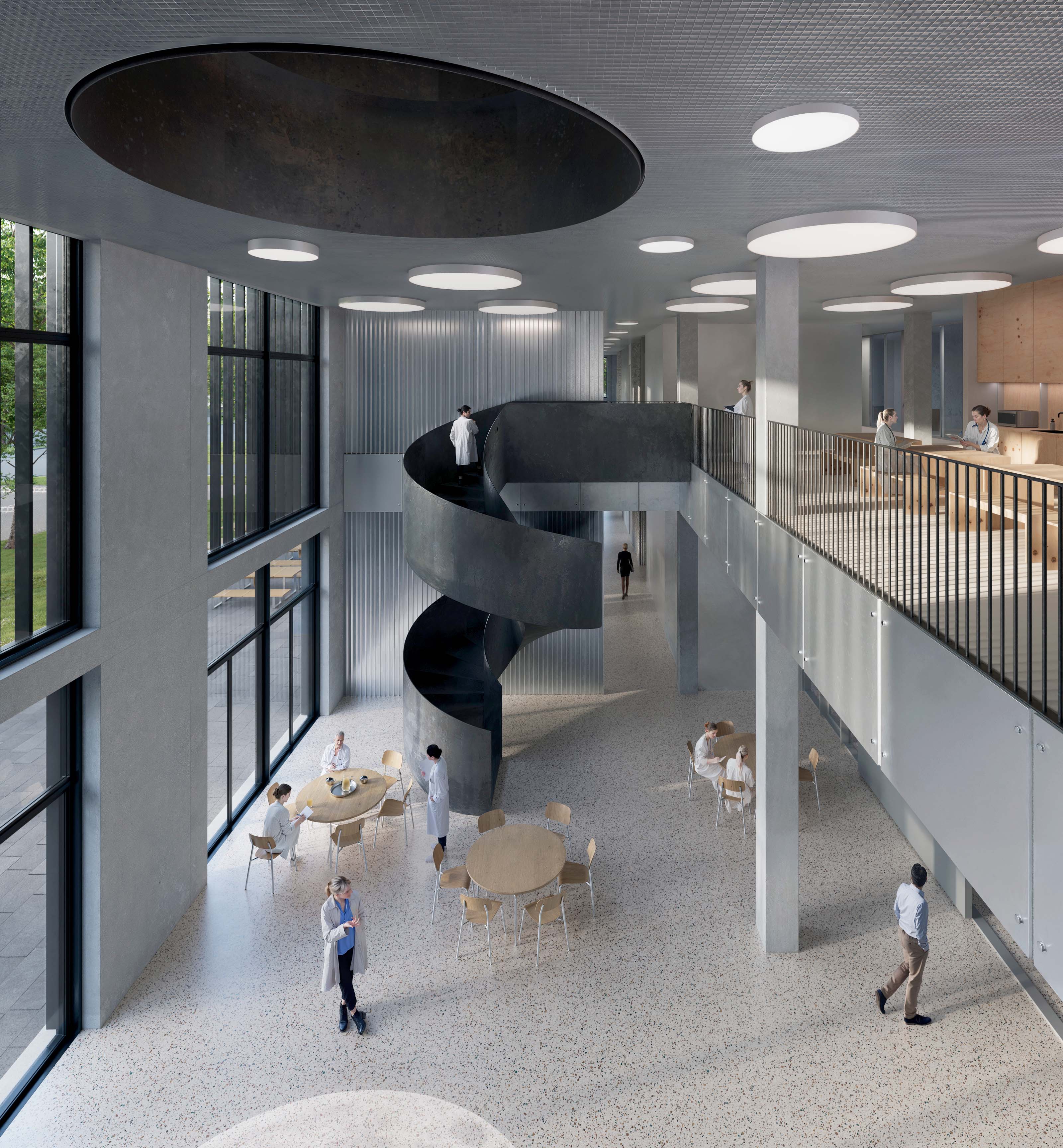
Building 330 will bring DTU Space together and, in addition to laboratories, include offices, meeting rooms, teaching laboratories, and a main entrance area for the entire institute.
Connected to the entrance area will be a space called 'Flight Analysis', where researchers receive data from space. Monitors will show live images, for example from Mars.
The ground floor will also include teaching laboratories and classrooms.
In the central area of the ground floor, DTU Space will communicate space research and technology to building users and visitors.
Outdoor areas, common spaces, and bicycle parking
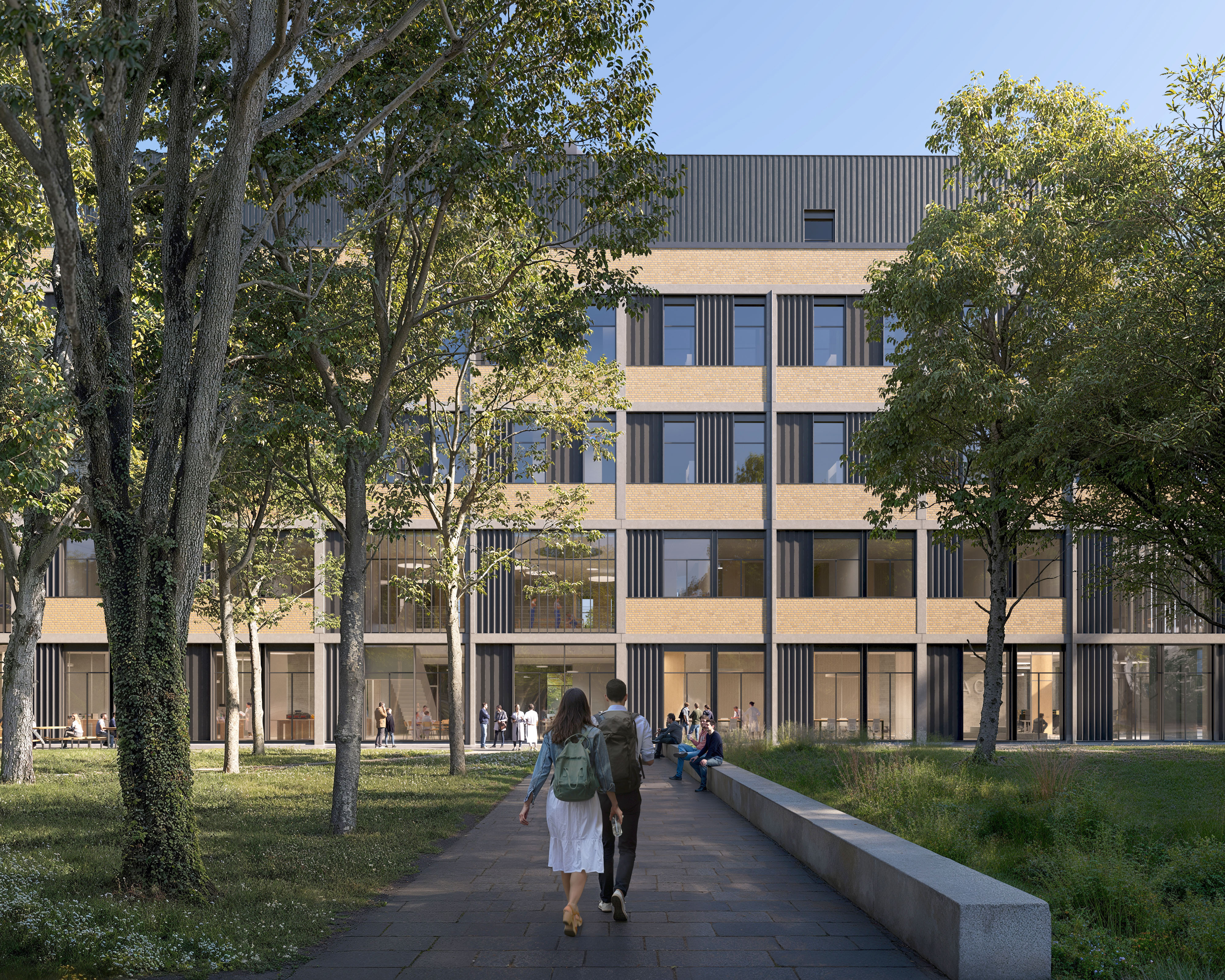
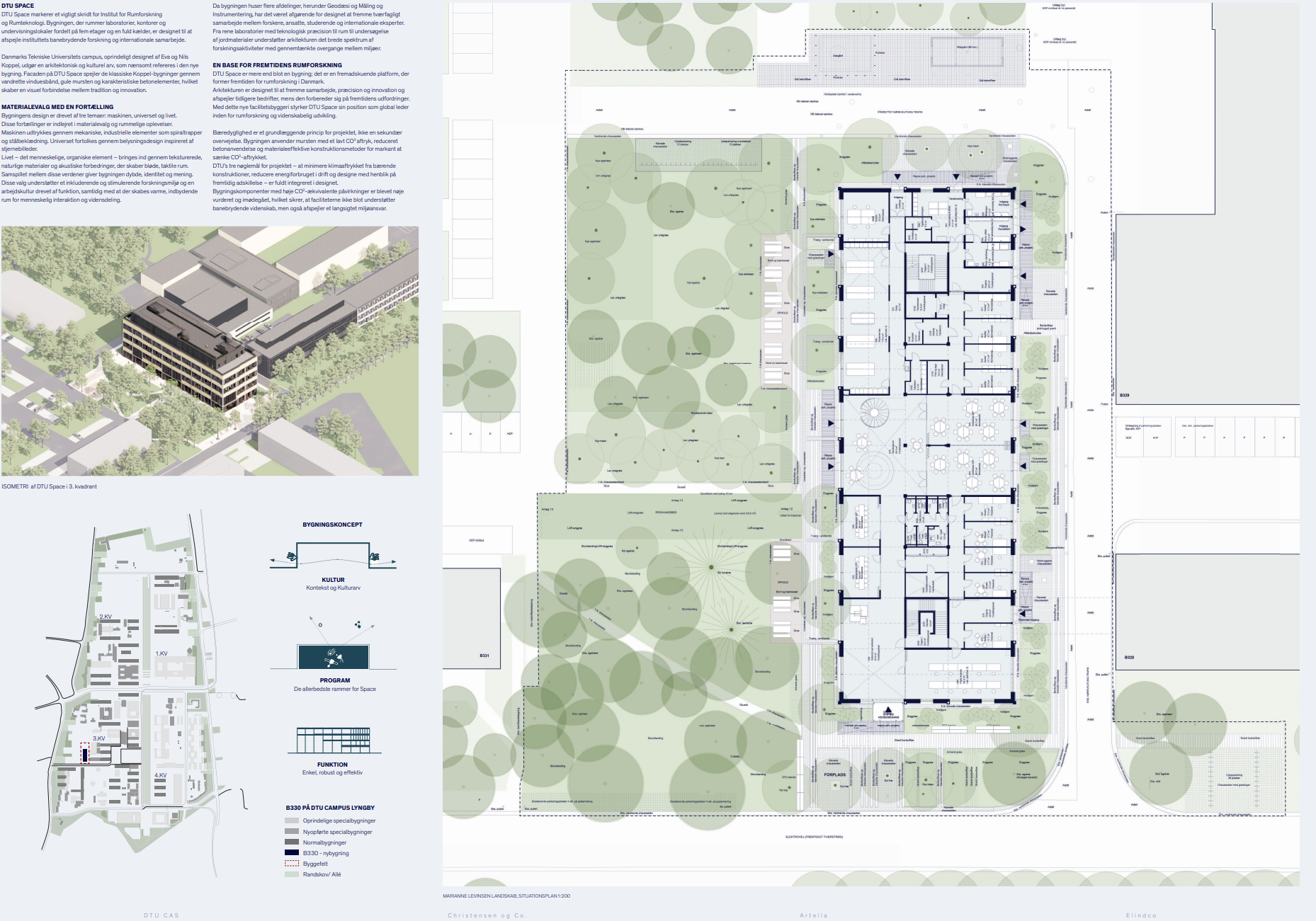
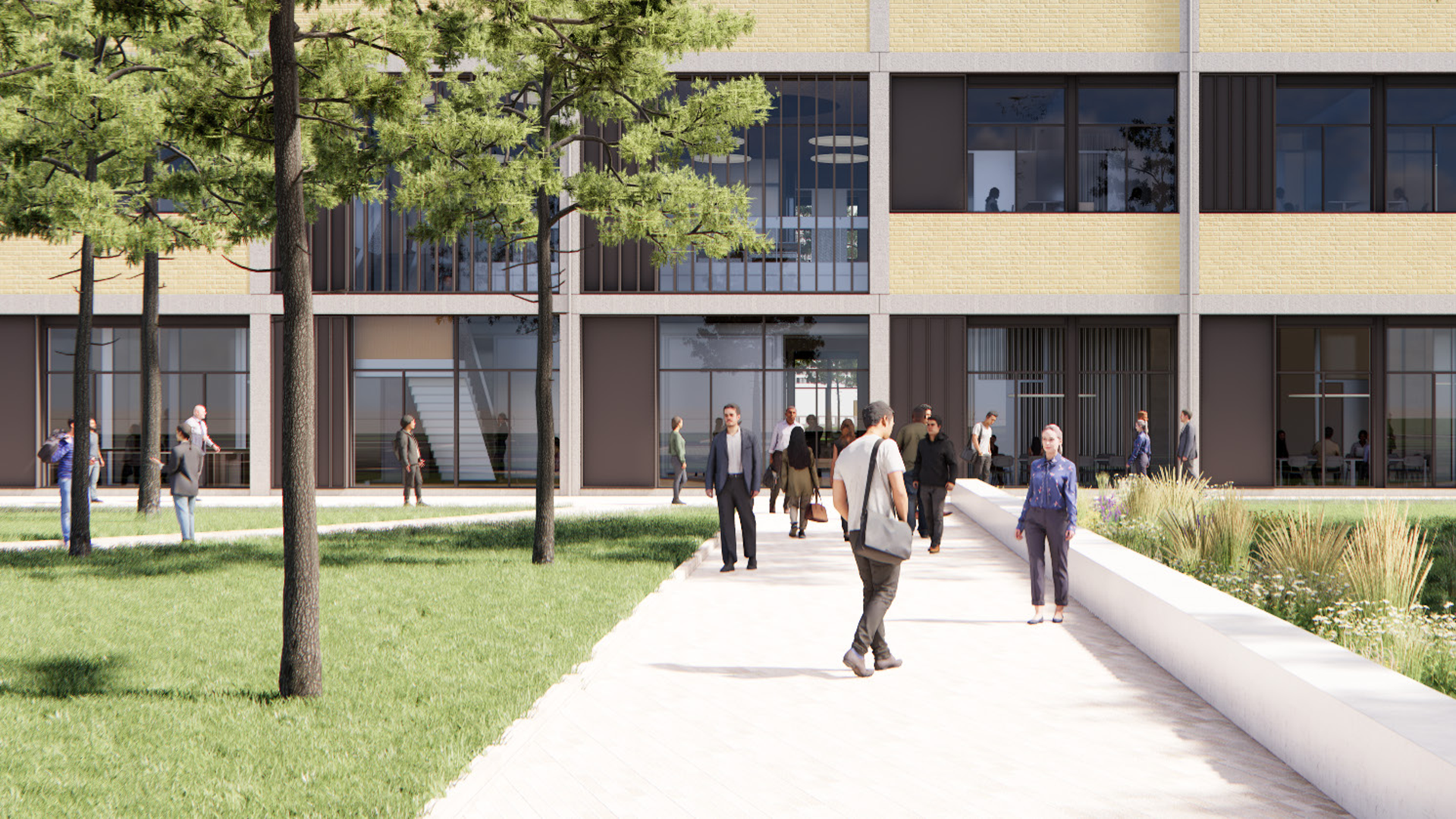
The outdoor areas around the new building will be part of the characteristic green landscape of DTU Lyngby Campus. Several of the existing mature oak, pine, and large trees will be supplemented with new trees, mainly native species. The new forecourt will be connected to DTU's overall infrastructure.
A so-called LAR basin (Local Rainwater Management) will be established at Building 330 as part of DTU's climate adaption strategy.
Building 330 will be connected to the existing DTU Space facilities via a tunnel to Building 328.
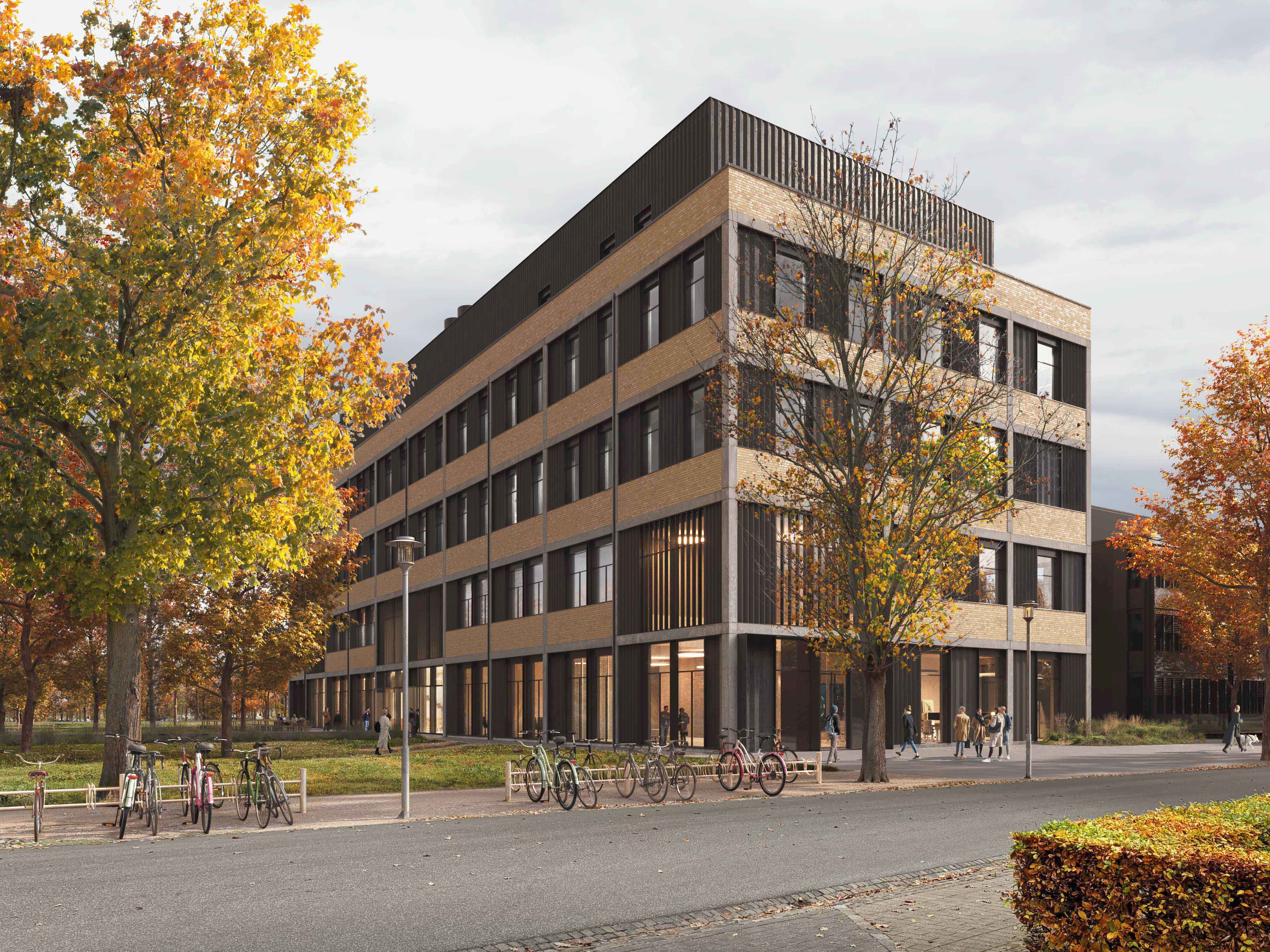
Building 330 will have five floors, be approximately 27 meters high, and have a total area of about 8,200 m2 including the basement.
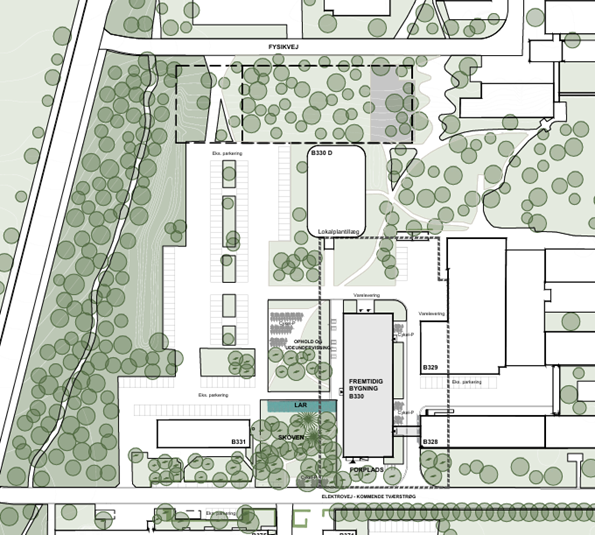
Building 330 will be connected to the existing DTU Space facilities, since the research activities require frequent transport of elements, components, and equipment between buildings. Building 330 will also connect to the existing building complex to create a new main entrance and gathering point for all of DTU Space.
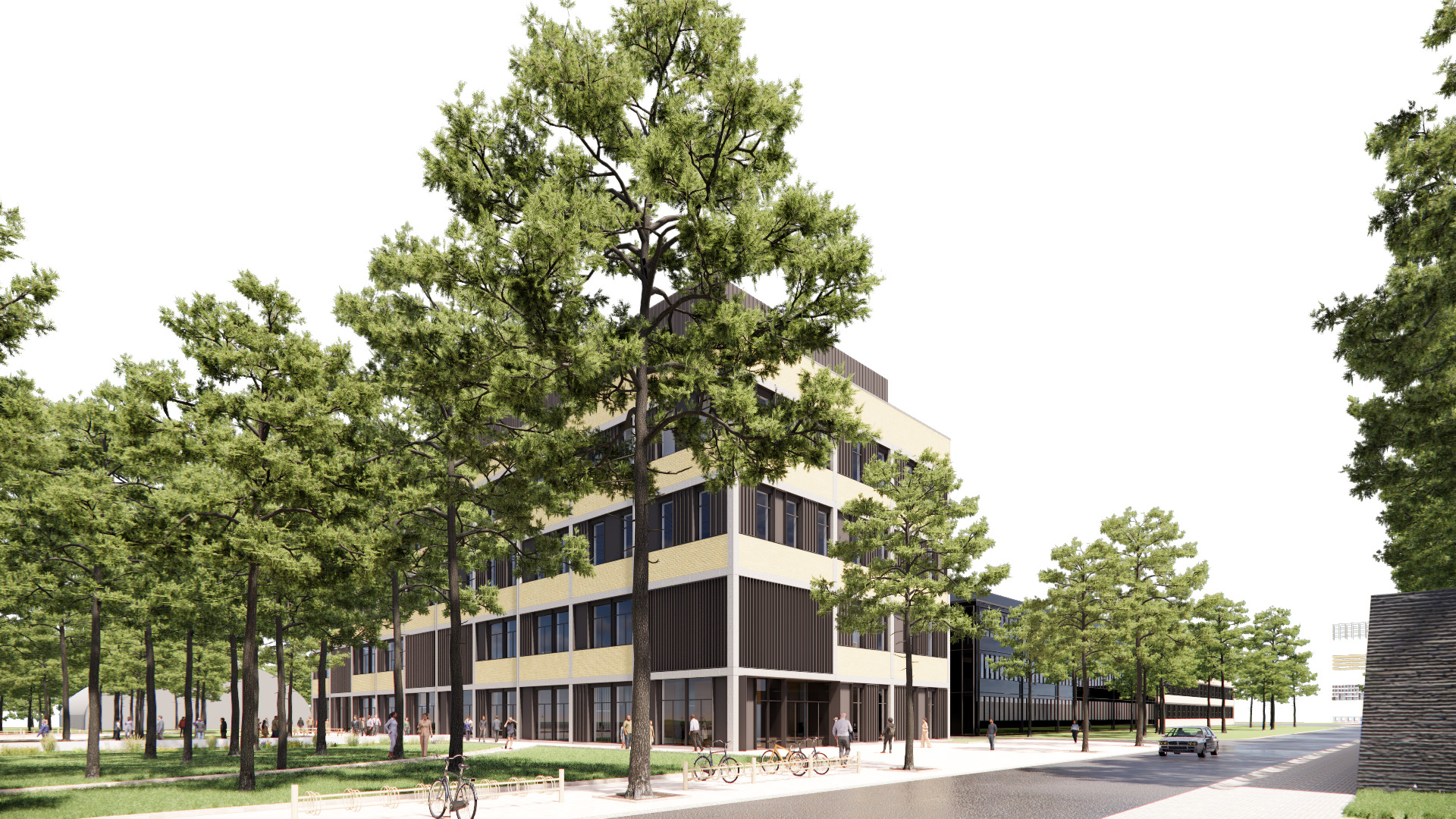
The building will have a strong architectural expression with clear references to the architecture of DTU's original buildings designed by Eva and Nils Koppel.
The facade will be clad in yellow brick, window frames will be black, and the concrete structure will be gray.
The ground floor will be open and inviting with glass facades, allowing people to look inside and follow the activities. In the entrance area, daily users and visitors will gain insight into DTU Space's world through an enlightening educational, and sensory experience.
The top floor is prepared for installing domes for star observation. These domes will give the building a recognizable geometric shape. The rest of the top floor will mainly contain technical installations and will appear more closed and recessed.
The surrounding landscape will be designed with respect for DTU's cultural heritage and integrated into the overall plan for DTU Lyngby Campus
DTU's goal is to design and build Building 330 with a strong focus on sustainability. This includes minimizing the CO2 footprint from construction, optimizing energy use, designing for disassembly and adaptability, and aiming for DGNB 2025 certification.
Operational solutions will be optimized to ensure the lowest possible energy consumption.
DTU is constructing Building 330 together with the general contractor 'Elindco', the consulting engineers 'Artelia', and the architects 'Christensen & Co Architects'.
Building 330 is expected to be ready for use in mid-2028.
The construction project places strong emphasis on a healthy collaboration culture involving engineers, contractors, architects, and landscape architects.
The focus is on building a trust-based and open working environment where knowledge is shared, conflicts are resolves constructively, and teams support each other across disciplines and companies. A collaboration committee has been established to follow and measure cooperation throughout the project.
A special feature of the project is the so-called variant phase in the construction process. The project team has worked with three building variants, developed and evaluated based on criteria such as research functionality, sustainability, and low energy consumption.
Read more about the collaboration and the variant phase in Newsletter 1 (in danish)
Photos for Download
When using the images, credit: CCO Architects.

Videos about Building 330
Contact
Jens W. Ø. Larsen Projektleder Campus Service Mobil: 40 60 47 07 jwola@dtu.dk
Michael Møller Jensen Projektleder / DGNB-Konsulent Bygninger Campus Service Mobil: 20311055 mimoll@dtu.dk